
CBO Spotlight
Meet a community-building organization at the forefront of Oregon’s local disaster mitigation efforts.
Oregon Livestock Council
Oregon Livestock Council is dedicated to supporting ranchers and livestock owners across Oregon and creating partnerships between Federal, State, and local agencies to support private citizens during fire, flood, and other evacuation disasters. The group has members within almost every COAD and VOAD in the state and has connected with 18 counties and 4 tribal nations so far. They are 100% volunteer and 100% donation and grant-funded. A key organizational focus is developing volunteers: team members have multiple layers of training and credentials, and will not work past their training level. Oregon Livestock Council does not self-deploy; they must receive a call from a jurisdiction in order to respond to the disaster. A livestock emergency response team supports evacuation, sheltering, resources coordination (feed, water), working with partners, and TLAER (Technical Large Animal Emergency Rescue).
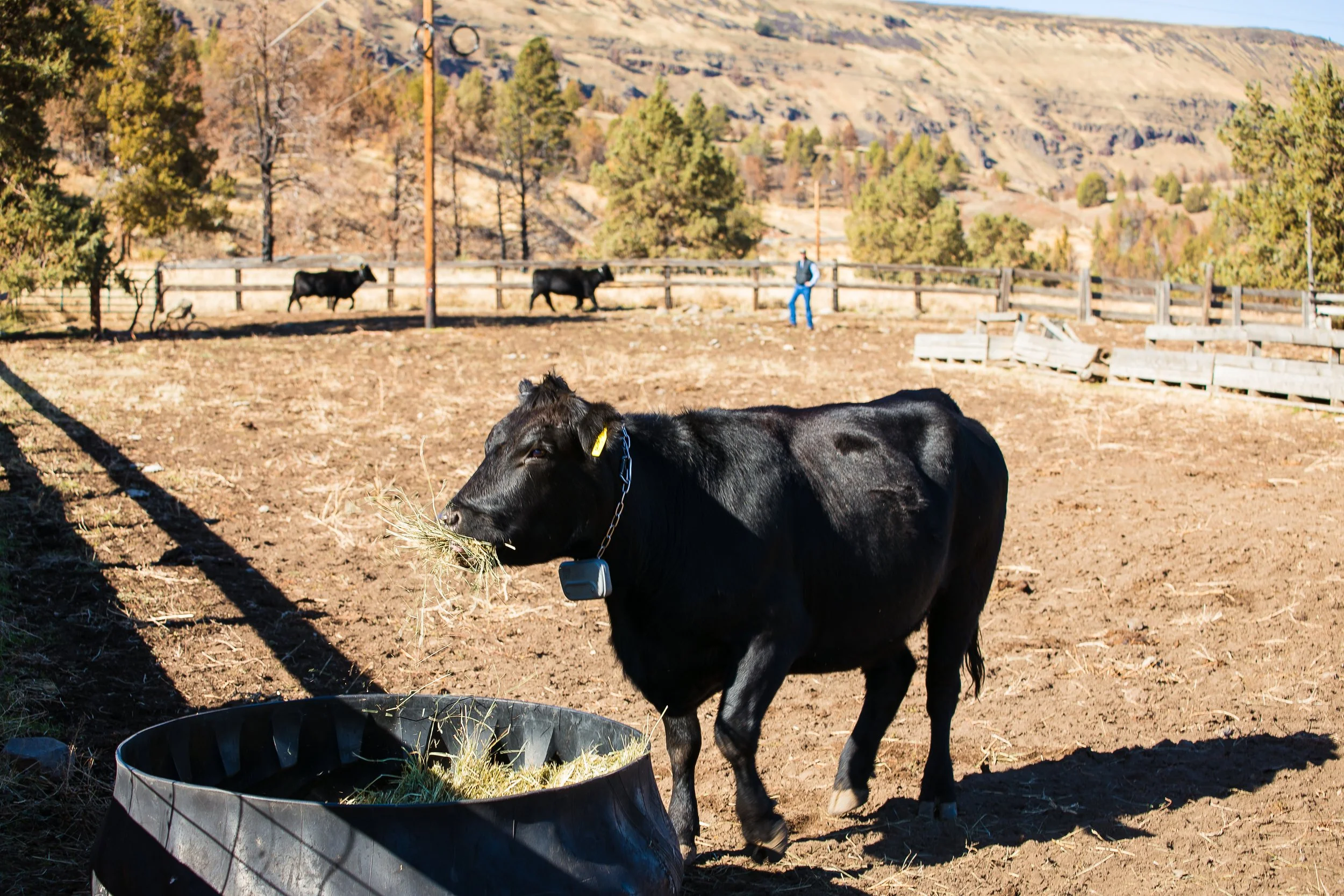
Photo by K’lynn Lane
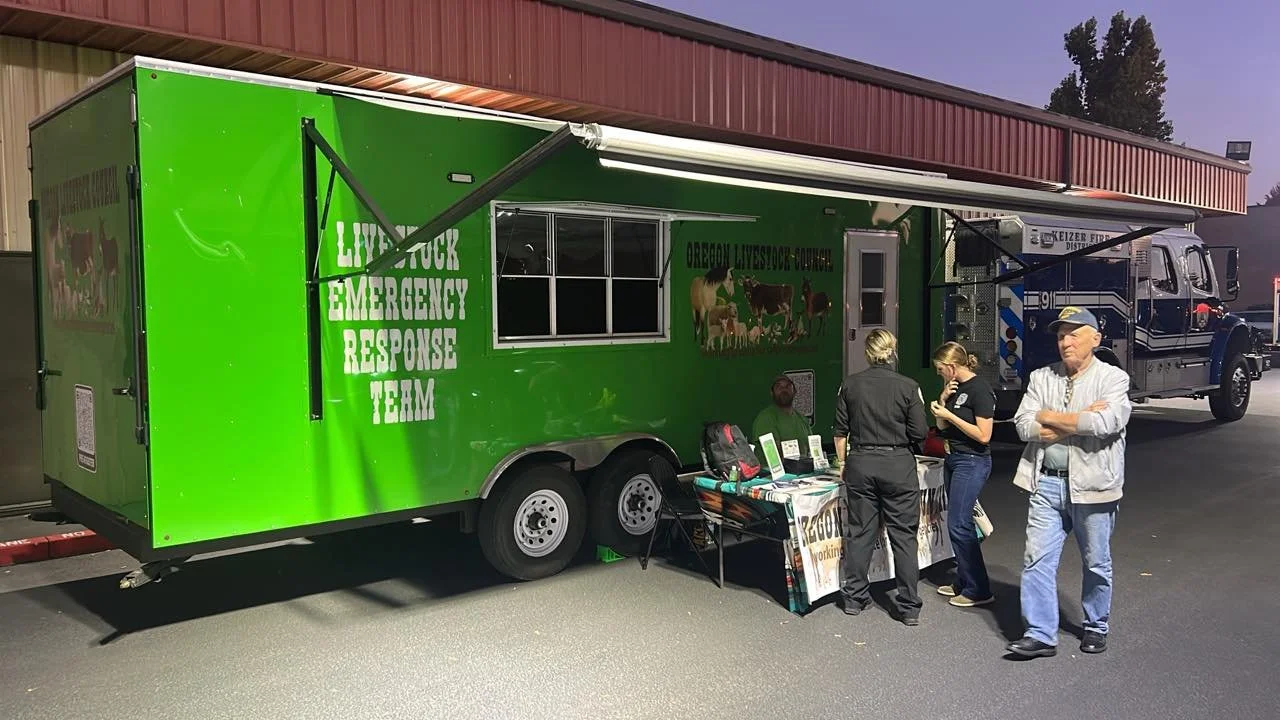
Photo provided by Oregon Livestock Council
In addition to supporting livestock owners and animals during evacuation emergencies, Oregon Livestock Council is able to provide support for other large animal emergencies, such as an overturned trailer, pulling a large animal free from mud, and other circumstances. During non-disaster times, the organization works tirelessly to deliver education and awareness to ranchers and livestock owners around emergency preparedness for their animals. In Oregon, “livestock” refers to any domesticated farm animal, including bees.
Oregon Livestock Council is piloting the first livestock pre-registration program in the country, in partnership with Relief Compass. Oregon livestock owners pre-register the numbers of animals they own and a few other details into a statewide database, which will provide more accurate estimates of resources needed to respond to a disaster, and the priorities to focus on high-risk community members with access and functional needs. This pre-registration program also provides contact information to allow quicker communication to facilitate evacuation and response during emergencies. For example, a cattle rancher who has registered their livestock within the app would receive proactive communication about evacuation needs in the case of a wildfire near their grazing grounds, and Oregon Livestock Council could be notified to begin coordinating and leveraging their relationships and partnerships to support evacuating, feeding, and watering the impacted livestock.